Next Generation Gift Card
“I swear I only went in for toothpaste.”
Anne dropped two shopping bags onto my kitchen counter and stared at me like she’d just survived a financial crime scene.
Inside the bags – candles, a throw blanket, snacks, three tiny plants, and somehow… no toothpaste.
“You spent how much?” I asked carefully.
She winced.
“Enough that I suddenly understand why people disappear into the woods and live off-grid.”
Honestly? Relatable.
Because most of us don’t actually struggle with budgeting in theory. We struggle with budgeting in real life.
The random Target runs, daily iced coffee, your “quick little treat”, late-night scrolling that somehow turns into online shopping. The tiny purchases that don’t feel dangerous individually… until your bank account starts acting dramatic.
And weirdly enough, one of the smartest budgeting tools people are now using isn’t some complicated finance app.
It’s gift cards. Not gifting gift cards.
Using gift cards for themselves.
And once I started researching how people were using gift cards as personal budgeting tools, I realized this trend was way bigger — and smarter — than I expected.
Wait… People Use Gift Cards to Budget?
Yes.
And apparently, a lot of them.
According to multiple financial wellness reports and budgeting studies in 2025, more consumers are now using gift cards as controlled spending tools for categories like:
Groceries | Coffee | Gas | Shopping | Subscriptions | Restaurants | Everyday Essentials
Think of it like the old-school cash envelope system… but digital.
Instead of carrying physical envelopes full of cash labelled, “Groceries”, “Coffee”, “Fun Spending” …people now are loading fixed amounts onto gift cards instead.
And honestly? It works surprisingly well.
Because once the balance runs out…that spending category is done.
My “Budget” Was Embarrassing
“I don’t even want to know how much I spend on coffee,” Anne said while opening her Starbucks app.
“Too late,” I replied. “We’re checking.”
Bad idea.
Turns out, her harmless little “morning treat” routine was quietly eating hundreds of dollars every month.
And look — nobody’s saying coffee is evil. Sometimes a latte is literally emotional support.
But daily habits add up fast when they’re frictionless. That’s where gift card budgeting becomes weirdly powerful.
Instead of swiping a debit card endlessly, Anne started loading a fixed amount onto a coffee shop gift card every two weeks. That was it.
No complicated spreadsheets. Guilt? Nada. And, most important, no financial crash at month end.
Just:
“When the balance is gone, we stop.”
And something about seeing a finite balance changed her behavior immediately.
Suddenly every coffee felt intentional instead of automatic.
Step-by-Step: Manage Budget Using Gift Cards
#1 – “Digital Envelope” Budgeting Method
This is basically the modern version of cash envelopes — minus the actual envelopes.
Here’s how people are using it this year:
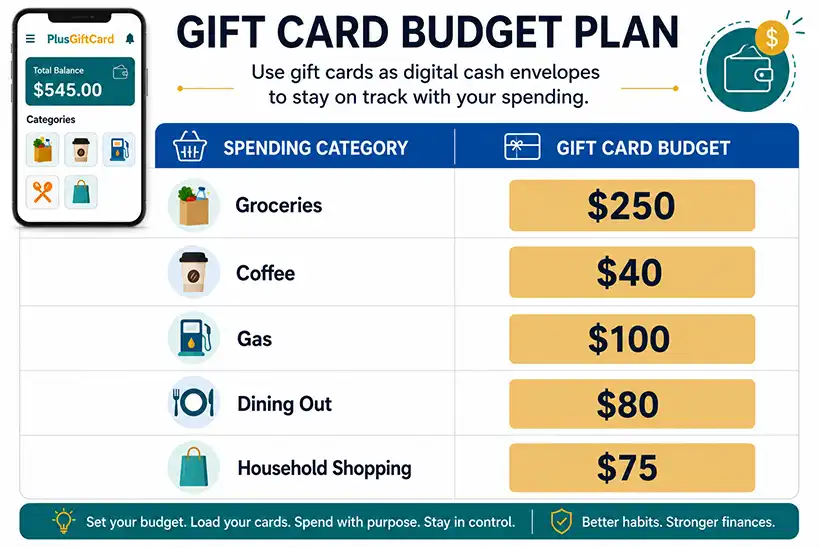
Instead of using one unlimited debit card for everything, each category gets its own spending limit.
And psychologically? That changes everything.
Because people spend differently when there’s a visible boundary.
#2 – Stop Impulse ‘Credit Card Spending’
Here’s the sneaky thing about credit cards.
They disconnect spending from reality.
You swipe, tap, and move on. But the ‘future-you’ deals with it later.
Gift cards force spending to feel finite.
If you walk into Target with a $50 gift card instead of unlimited card access, your brain suddenly starts asking:
“Do I actually need this?”
Anne told me this happened to her during a random home décor trip.
“I picked up this ridiculous decorative pumpkin,” she said.
“And?”
“I put it back because I realized it was basically costing me groceries.”
Growth.
#3 – Useful for Variable Income Too
This part honestly fascinated me.
A lot of freelancers, commission workers, side-hustlers, and gig workers are now using gift cards to stabilize spending during high-income months.
Meaning: During stronger months they preload gift cards for grocery, gas, coffee budgets, or household spending ahead of time.
So, when slower months hit? The essentials are already covered. In unpredictable economies, that kind of planning matters.
It’s budgeting mixed with future-proofing.
#4 – Secret Budget Hack: Stack Discounts
Now this is where budget-centred people become terrifyingly efficient. Because some shoppers aren’t just budgeting with gift cards…they’re saving extra money while doing it.
People are: buying discounted gift cards from warehouse clubs, earning cashback, stacking store rewards, combining sale prices, and using loyalty apps simultaneously.
Meaning, your $100 grocery budget might actually cost $95, while earning rewards, during a sale, and with cashback layered on top.
Which is honestly kind of elite behavior.
But Gift Cards Aren’t Perfect
Okay — quick reality check.
Traditional gift cards do come with annoying limitations.
Like, a) leftover balances you forget about, b) money locked into one store, c) difficult tracking, d) returns turning into store credit, e) or random cards sitting untouched in drawers for years.
Anne once found: $4.83 on one card, $2.11 on another, and somehow an ancient mall gift card from 2019.
“That’s basically lost money,” she sighed.
Exactly.
Traditional gift cards work well for budgeting…until flexibility disappears.
Where PlusGiftCard Makes Budgeting Smarter
This is where PlusGiftCard starts feeling less like a normal gift card platform and more like a budgeting tool people accidentally discovered.
Because instead of locking money into one retailer forever, PlusGiftCard gives users flexibility that traditional cards usually don’t.
Think of it in this way.
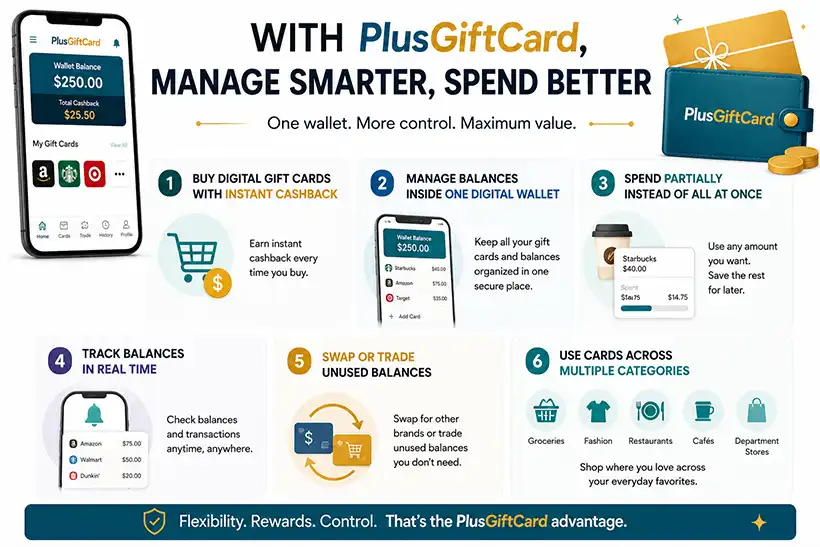
So instead of forgotten balances scattered across ten random cards…
everything stays organized digitally.
And honestly? That solves one of the biggest frustrations people have with traditional gift card budgeting.
PlusGiftCard also works surprisingly well for: setting spending caps, controlling impulse shopping, organizing monthly spending, and stretching budgets further with cashback rewards.
Which makes it feel less like:
“Here’s a gift card” …and more like:
“Here’s a smarter way to manage money.”
Why This Budgeting Trend Is Growing So Fast
Because people are exhausted. Not just financially — mentally.
Traditional budgeting often feels: restrictive, overwhelming, hyper-complicated, or impossible to maintain long-term.
Gift card budgeting feels simpler.
It creates visible limits, intentional spending, less emotional overspending, and fewer “where did my money go?” moments.
And for a lot of people? That tiny bit of structure is enough to finally stay consistent.
Tips to Make Gift Card Budgeting Smoother
After trying this method myself, I picked up a few surprisingly simple tricks that made gift card budgeting much easier to stick with — and honestly, much less stressful than traditional budgeting apps or spreadsheets.
Because here’s the thing nobody tells you about budgeting:
If it feels too restrictive, you probably won’t stick to it.
Gift card budgeting works because it feels manageable. Flexible. Real-life friendly.
- Start small, with 2-3 Gift Cards
When I first started, I made the mistake of trying to organize everything at once.
Groceries, coffee, shopping, takeout, streaming, and gas. It lasted about three days.
So instead, start small.
Pick one or two spending categories where you know money disappears quickly — gas, coffee shops, dining out, online shopping, Target runs… whatever your “budget danger zone” happens to be.
That gives you a baseline.
You start noticing your patterns without feeling overwhelmed.
Anne actually laughed when I told her I was budgeting with gift cards.
“You mean like middle-school lunch cards?” she asked.
“Kind of,” I said. Except now my iced caramel latte budget can’t emotionally ruin my savings account.”
And weirdly… it worked.
- Keep a Gift Card to Meet Your “Miscellaneous” Buffer
Life has a funny way of throwing random expenses at you exactly when your budget feels stable.
Flat tire, last-minute birthday dinner, forgotten school supplies, and that one friend who suddenly wants brunch today.
A small miscellaneous gift card or backup spending buffer helps you stay flexible without completely wrecking your monthly plan.
- Track Balances in One Platform
One mistake I made early on?
Forgetting how much money I actually had left on different cards.
At one point, I had: $6 on a coffee card, $11 on a grocery card, and $18 sitting untouched on a department store card.
Meanwhile, I was still spending directly from my debit card because I forgot the balances existed.
So, I started tracking everything inside my PlusGiftCard platform.
Simple. Not fancy. But effective.
You can also use: mobile wallets, notes apps, digital gift card organizers and spreadsheet trackers if you’re more organized than me.
The key is keeping everything somewhere you’ll actually check regularly.
- Watch Out for Fees
This one surprised me.
Some prepaid or generic gift cards can come with activation fees or maintenance fees — especially open-loop cards like Visa or Mastercard gift cards.
PlusGiftCard is a fee-free platform, that lets you earn $20 once you register or on every referral, which usually works better for budgeting.
If you already know where you shop regularly, buying cards for all those stores from one platform, keeps things cleaner and avoids unnecessary extra costs.
- Choose Local Loves
One of my favorite discoveries during this whole budgeting experiment?
A lot of local businesses offer gift cards too.
Local coffee shops, bookstores, family-owned restaurants, and farmers market vendors.
Buying local gift cards not only helps you budget intentionally — it also supports businesses in your own community.
And with PlusGiftCard featuring more than 300+ brands, somehow, spending feels more meaningful when you know exactly where your money is going.
My Biggest Lesson
If sticking to a budget feels exhausting, frustrating, or impossible sometimes… you’re definitely not alone.
What surprised me most about gift card budgeting wasn’t just the money I saved.
It was how much more aware I became of my spending habits.
That tiny pause before purchasing something?
It changes everything.
Gift card budgeting helped me: cut back on unnecessary spending, save money without feeling deprived, control impulse purchases and stay more intentional with everyday expenses.
Takeaway
A week later, Anne texted me a screenshot of her savings account.
“Guess how I saved this month.”
“How?”
“Less random spending. Fewer fake emergencies at Target.”
Progress.
And honestly, that’s what makes gift card budgeting work.
Not because it’s revolutionary or maybe it magically fixes money problems. But rightly so, as it quietly creates pauses.
Tiny moments between:
“I want this” and “Do I actually need this?”
And sometimes?
That pause is the entire difference between chaos and control.