Next Generation Gift Card
Gift cards have a bit of a reputation problem.
People love receiving them, use them almost immediately, and somehow still pretend they’re “not personal enough.” Which is funny considering Americans spend billions on gift cards every single year — and most of us would absolutely rather receive one than another scented candle we didn’t ask for.
The truth? A gift card only feels boring when the presentation feels rushed.
Because when you actually put thought into how you give it, a gift card becomes something else entirely: flexible, personal, surprisingly memorable — and honestly, sometimes more thoughtful than trying to guess someone’s size, style, skincare routine, coffee order, or current personality phase.
That’s why TikTok, Pinterest, Instagram Reels, and gifting blogs are suddenly full of people turning simple gift cards into mini experiences. Tiny scavenger hunts. Balloon reveals. Puzzle boxes. Coffee cup surprises. Even ‘money bouquets’ have entered the chat.
And honestly? We get it.
Why Presentation Matters More Than the Price Tag
There’s a reason people remember how a gift made them feel more than what it cost.
A $25 gift card tossed into a generic envelope says:
“I remembered at the last second.”
But that exact same card hidden inside a favorite book, tucked into a coffee tumbler, or wrapped inside seven ridiculous layers of boxes suddenly feels intentional.
Playful. Personal.
That tiny extra effort changes everything.
People don’t necessarily want more stuff – they want experiences, thoughtfulness, and flexibility.
Take my case story as an example.
Few years back on Christmas, my friend Anne completely changed my perspective.
She handed me what looked like a tiny takeout box tied with a velvet ribbon. I remember laughing and saying, “Sylvia, please tell me this isn’t leftover noodles.”
She grinned.
“Open it.”
Inside? A little folded note, some paper fortune cookies, and a digital gift card tucked beneath confetti.
The note said:
“Tonight’s prediction: You’re finally buying the boots you’ve been talking about for six months.”
And weirdly? It felt thoughtful. Personal. Like she actually knew me.
10 Creative Ways to Present a Gift Card
That’s when it clicked:
Gift cards aren’t boring or transactional.
Bad presentation is.
It’s 2026; people are rethinking gifting altogether. Americans spend billions on gift cards every year because they work. They remove the stress of guessing sizes, duplicate gifts, awkward returns, and those fake “Oh my god, I love it” reactions we’ve all mastered at family gatherings.
With a little creativity, it can feel intentional, funny, emotional, and surprisingly memorable.
And the best part? You don’t need Martha Stewart-level crafting skills to pull it off.
1. Hide It Inside a Puzzle
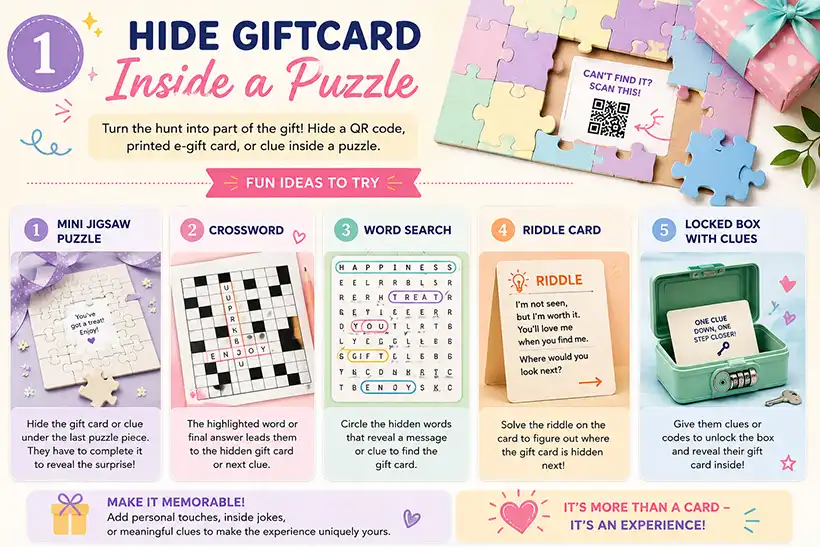
This is Anne’s favorite move because she enjoys watching people suffer just a little.
You can hide a QR code, printed e-gift card, or clue inside:
- mini jigsaw puzzle
- crossword
- word search
- riddle card
- Even a locked box with clues
“It’s basically emotional-escape room gifting,” she told me once while aggressively taping clues under coffee mugs.
And honestly? She’s not wrong.
The anticipation becomes part of the gift.
2. The ‘Box Inside a Box’ Trick Never Fails
You know this one.
Tiny gift card. Huge box. Then another box. Then another.
By box number four, everyone in the room becomes emotionally invested.
My elder brother once opened seven layers of wrapping paper just to find a coffee gift card taped to a potato.
To this day, he still talks about it.
That’s the point.
People remember experiences more than objects.
3. Turn It into a Mini Themed Basket
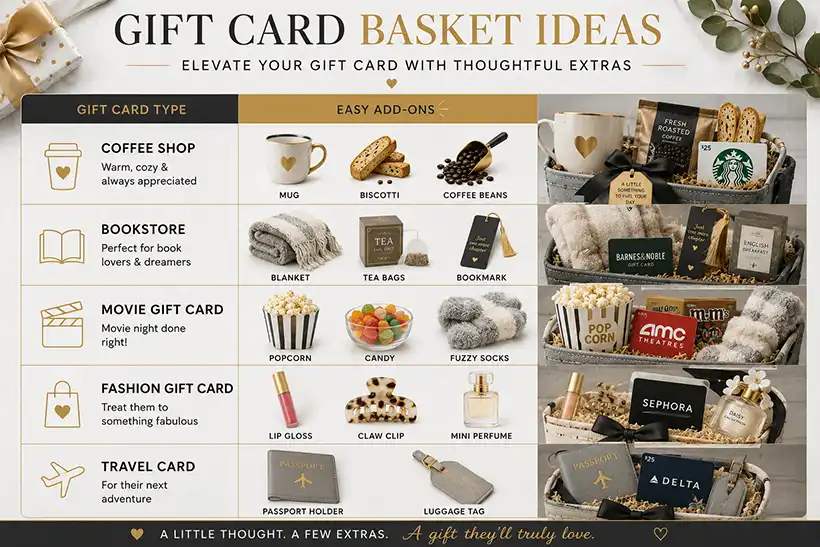
This is probably the easiest way to make a gift card feel elevated without spending a fortune.
A few examples Anne swears by:
“It tells the person you actually thought beyond the checkout screen,” Anne says.
And honestly, she’s right again.
4. Make It a Scavenger Hunt
This works ridiculously well for kids, partners, and chaotic friend groups. Hide clues around the house leading to the final gift card reveal.
One year, Anne made her boyfriend solve clues based on inside jokes from their relationship.
The final clue led to a taco truck gift card taped under the kitchen table.
Romantic? Weirdly yes.
5. Hide It Inside a Book
This one’s my favorite. And it feels incredibly personal when done right. Especially, if the book connects emotionally to the recipient.
Say, a cookbook with a restaurant gift card. Or, a travel memoir with an airline gift card.
Maybe, a thriller novel with a coffee shop card because, “you’ll need caffeine for this ending.”
It feels curated instead of generic.
6. Put It Inside a Balloon
This one has survived Pinterest for years because it’s still ridiculously fun.
Roll up the gift card.
Slide it into a balloon before inflating it.
Add confetti if you want extra drama.
Now the recipient has to pop the balloon to get the surprise.
It’s chaotic. Loud. Slightly stressful.
Which somehow makes it memorable.
7. Use Digital Gifting Creatively
This is where gifting has changed the most lately.
Digital gift cards don’t have to mean boring emails anymore.
Some newer gifting platforms let people:
- Regift balances
- Split spending
- Trade brands
- Track balances instantly
- Use only part of the card at a time
Which honestly makes way more sense for modern shopping habits.
Anne explained it best over brunch:
“The goal isn’t controlling the gift. The goal is making sure they actually enjoy it.”
That’s why more people now prefer flexible gift cards over traditional ones that often go partially unused.
Especially because nobody wants to be stuck with $11.42 sitting forever on a random store card.
8. Create a “Message in a Bottle”
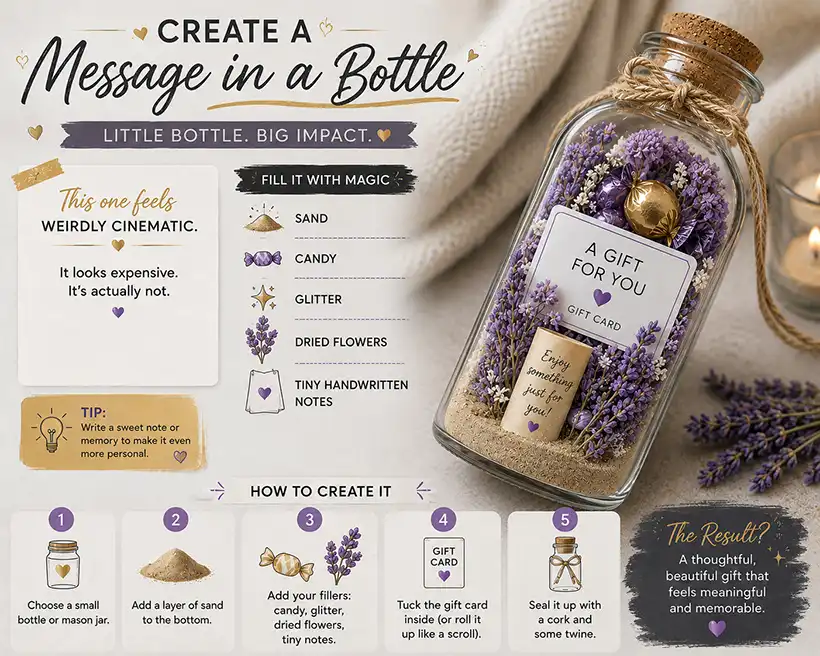
This one feels weirdly cinematic.
Take a small glass bottle or mason jar and fill it with:
- Sand
- Candy
- Glitter
- Dried flowers
- Tiny handwritten notes
Then tuck the gift card inside.
It looks expensive. It’s actually not.
My favorite version of this was Anne’s ‘Emergency Shopping Fund’ jar she gave me after a breakup.
Inside was:
- Chocolate
- Tiny affirmations
- A fashion gift card
- A note saying: ‘For emotionally necessary purchases only.’
Iconic behavior honestly.
9. Turn It Into a Joke Gift
These always win.
Some classics:
- Tape the card under a frying pan
- Hide it inside a vegetable box
- Put it in a sock labeled ‘tax documents’
- Wrap it like an engagement ring box
The confusion becomes entertainment.
10. Pair It with a Handwritten Note
This is the one thing people underestimate most.
A handwritten note changes everything.
Because suddenly the gift card becomes attached to a memory, an emotion, or a relationship instead of just spending power.
Even something simple works:
“I saw this and thought about your Sunday coffee ritual.”
Or:
“For your next bookstore spiral.”
Tiny details matter.
New Era of Gift Cards Is Actually… Surprisingly Flexible
Part of the reason gift cards are becoming easier to personalize now is because the cards themselves are changing.
Traditional gift cards used to be incredibly rigid,
One brand | One balance | One use.
That’s it.
But newer digital platforms are starting to rethink how gifting actually works in real life.
For example, platforms like PlusGiftCard are shifting gift cards toward something more flexible and recipient-friendly — which honestly makes creative gifting easier too.
Instead of being locked into one fixed experience, recipients can:
- use part of the balance now and save the rest
- swap brands if preferences change
- re-gift balances
- trade unused value
- keep everything inside a digital wallet
- even earn cashback on purchases
Which solves one of the biggest hidden problems with gifting:
The fear of giving someone the wrong thing.
Because now the gift can evolve with the person receiving it.
And in a weird way, that actually makes gift cards feel more thoughtful — not less.
The Real Secret to Making Gift Cards Feel Thoughtful
The funny thing about gift cards is that people only call them “impersonal” until they receive one they actually wanted.
Then suddenly it’s:
“Wait… this is actually perfect.”
That’s why the best gift-card presentations work so well.
They combine two things’ people genuinely love, a) freedom of choice and b) evidence of thoughtfulness.
And when you put those together, even the simplest little card starts feeling surprisingly meaningful.
Because a good gift isn’t always about spending more. Sometimes it’s just about making someone feel understood.
Truth Unwrapped
Anne said something recently while helping me wrap gifts:
“Nobody remembers the wrapping paper forever. They remember how the gift made them feel.”
And honestly, that’s the entire point.
Gift cards work because they remove guesswork.
Creative presentation works because it adds emotion back into the experience.
Together?
That’s kind of the perfect combination.
So, no — gift cards aren’t boring anymore. Not when they’re hidden inside puzzles; when they arrive in balloons; when they come with stories, jokes, scavenger hunts, handwritten notes, or thoughtful flexibility.
And definitely not when the recipient can actually use the gift in ways that fit their life instead of forcing themselves into a single-store box.
As Anne would say:
“The best gifts aren’t always about surprise. Sometimes they’re about understanding someone well enough to give them choice.”