
 Next Generation Gift Card
How Digital Gift Cards Can Help Control Spending?
Control Spending Smarter with Digital Gift Cards!
Every year, millions of people download budgeting apps, create spreadsheets, and promise themselves that this year will be different. They vow to spend less on takeout, cut back on impulse purchases, and finally stop wondering where their money disappeared at the end of the month.
Yet many of those carefully designed budgets have already been abandoned.
The problem is not always a lack of financial knowledge. Most people already know they should spend less than they earn. The challenge lies in controlling spending in real time.
That is where digital gift cards become surprisingly useful.
Traditionally viewed as presents for birthdays and holidays, digital gift cards are increasingly being used as budgeting tools. It creates a built-in spending limit that many people find easier to follow than traditional budgets.
In a world where overspending often happens because payments feel invisible, digital gift cards make spending visible again.
Digital Gift Cards as Modern Spending Envelopes
Global gift card industry is expected to expand significantly, increasing from US$825.3 billion in 2026 to US$2.22 trillion by 2033. This growth is being fueled by the widespread adoption of digital payment methods, mobile wallets, and online shopping platforms, which are making gift cards an increasingly popular choice.
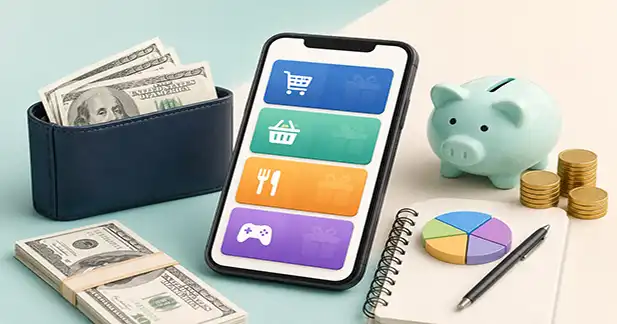
Financial planners have long recommended the envelope budgeting system. Under this approach, people place cash into separate envelopes labeled categories such as groceries, transportation, entertainment, and dining. When an envelope is empty, spending stops.
The method works because it creates visible spending boundaries.
Digital gift cards accomplish the same goal while fitting naturally into today’s digital economy. Instead of carrying cash, consumers simply use category-specific gift cards.
For example:
- Grocery gift card can cover monthly food purchases.
- Retail gift card can serve as a clothing budget.
Because each category has a predetermined balance, consumers gain a clearer understanding of where their money is going.
Role of Digital Gift Cards in Preventing Impulse Buys
Impulse spending is one of the biggest threats to financial stability.
A consumer may enter a store intending to buy one item and leave with five. Online shopping makes the situation even worse because recommendations and limited-time offers constantly encourage additional purchases.
Using digital gift cards creates natural spending restrictions. Global gift card industry is expected to expand significantly, increasing from US$825.3 billion in 2026 to US$2.22 trillion by 2033. This growth is being fueled by the widespread adoption of digital payment methods, mobile wallets, and online shopping platforms, which are making gift cards an increasingly popular choice.
When shoppers know they have a limited balance, they become more selective about what they purchase.
Instead of asking, “Do I want this?”
They begin asking, “Is this worth using part of my remaining balance?”
That subtle psychological shift encourages more deliberate purchasing decisions and reduces unnecessary spending.
Many consumers who use gift card budgeting report becoming significantly more aware of their habits simply because they must monitor remaining balances.
Managing Daily Expenses with Digital Gift Cards
One of the smartest applications of digital gift cards is assigning them to recurring expenses.
Many households struggle because flexible spending categories gradually expand over time.
- Dining out becomes more frequent.
- Coffee purchases become daily.
- Entertainment subscriptions multiply.
Digital gift cards can establish boundaries around these areas.
For example, someone might allocate $200 monthly for groceries, $100 monthly for restaurants, $50 monthly for coffee and $75 monthly for entertainment.
By loading those amounts onto separate digital gift cards, they create spending guardrails that are difficult to ignore.
The process transforms budgeting from a theoretical exercise into a practical system.
Cashback Makes Budgeting Even More Effective
One often-overlooked advantage of using digital gift cards for budgeting is the opportunity to earn cashback on planned purchases. Instead of waiting for discounts at checkout, shoppers can reduce their effective spending before they even make a purchase. This approach aligns with the core principle of budgeting: maximizing value from every dollar spent.
Platforms such as PlusGiftCard enhance this benefit by offering cashback on eligible digital gift card purchases. It allows users to stretch their budgets further. Combined with the spending limits that digital gift cards naturally provide, cashback rewards create a powerful system for both controlling expenses and increasing savings.
Common Mistakes to Avoid
Like any financial tool, digital gift cards work well when used strategically.
One common mistake is purchasing cards for stores that are rarely visited. A digital gift card should support planned spending, not encourage additional spending.
Another mistake is ignoring expiration dates or forgetting unused balances. Consumers should track balances and redemption deadlines to ensure every dollar is used effectively.
It is wise to avoid loading excessive amounts onto a single card. Smaller balances provide flexibility and reduce the risk of unused funds.
Creating a Gift Card Budgeting System
For consumers interested in trying gift card budgeting, the process is remarkably simple.
- Start by reviewing monthly spending patterns.
- Identify categories where overspending frequently occurs.
- Choose one or two categories initially rather than attempting a complete budgeting overhaul.
- Purchase digital gift cards for those categories.
- Commit to spending exclusively through the gift card balance.
- Track results for one month.
Many people discover that even this small change increases spending awareness and improves financial discipline. Over time, additional categories can be added to the system.
Future of Budget-Conscious Spending
As digital commerce continues expanding, consumers need budgeting tools that match modern spending habits.
Traditional cash envelopes are increasingly impractical in a world dominated by online purchases, mobile wallets, and app-based transactions.
Digital gift cards bridge that gap.
They combine the convenience of digital payments with the discipline of prepaid spending. Instead of relying entirely on willpower, consumers create financial boundaries before they begin shopping.
That simple shift can make a meaningful difference.
Takeaway
Controlling spending is rarely about eliminating enjoyment. It is about creating intentionality.
The most effective budgets are not necessarily the strictest ones. They are the ones people can actually maintain. That is why digital gift cards have emerged as an increasingly popular budgeting tool.
They help consumers set spending limits, reduce impulse purchases, allocate funds to specific categories, and maintain awareness of where their money goes. Whether you are trying to reduce discretionary spending, manage household expenses, or save for future purchases, digital gift cards can provide a straightforward and effective solution.
If you’re looking for a convenient way to purchase and manage digital gift cards from leading brands, explore PlusGiftCard. Discover how digital gift cards can become an important part of your budgeting strategy.