
 Next Generation Gift Card
When NOT to Give a Gift Card: Situations Where Other Gifts Work Better
When not to give gift cards and what to choose instead!

Gift cards are one of the most popular and convenient gifting choices today. In a fast-paced world with diverse preferences, they offer a quick and practical solution for various occasions. However, despite their flexibility, they aren’t always the right fit.
Gifting goes beyond convenience—it reflects emotion, intention, and the nature of your relationship. In certain cases, a gift card can feel impersonal or even inappropriate, making gift card etiquette essential to understand.
In this blog, we’ll explore the situations where gift cards are inappropriate, along with thoughtful alternatives to gift cards. We will highlight key gift card pros and cons to help you make more informed gifting decisions.
Situations When Not to Give a Gift Card
When Personal Touch Matters Most
One of the main drawbacks of a gift card is the lack of emotional depth. While it offers freedom of choice, it often removes the element of surprise and effort that comes with a carefully selected gift. This becomes particularly noticeable in relationships that are deeply personal.
For instance, when gifting a close family member, partner, or close friend, the expectation is usually something more thoughtful. A gift card in such cases can feel like a shortcut rather than a heartfelt gesture.
This is one of the key moments when not to give a gift card. Instead, consider something that reflects your understanding of the person, something that shows you’ve paid attention. A handwritten letter, a customized item, or even a small meaningful gift can leave a stronger impression than a generic card.
Milestone Moments Deserve More Than Convenience
Life events such as weddings, anniversaries or major achievements carry deep emotional significance. These are not everyday occasions; they are milestones that people remember for years.
In these cases, gift cards are inappropriate. If you are very close to the person, a more personal or symbolic gift is often more appreciated. For example, a wedding gift that contributes to a couple’s new journey, often carries more emotional weight than a simple stored-value card.
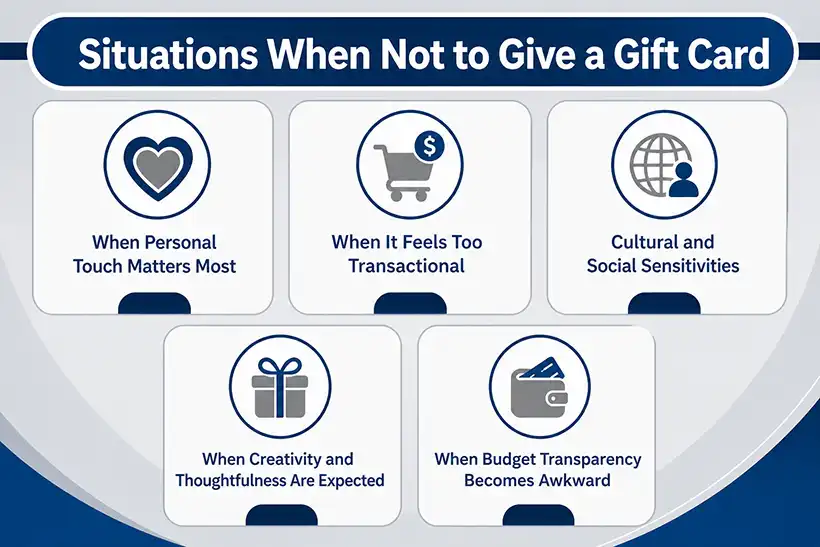
When It Feels Too Transactional
Another important aspect of gift card etiquette is understanding the tone of the relationship. Gift cards can sometimes feel overly transactional, especially in emotionally sensitive situations.
Think about occasions like expressing sympathy, apologizing, or supporting someone during a difficult time. In these moments, the recipient is not looking for convenience, they are looking for empathy and connection. A gift card may feel out of place, almost like a substitute for genuine emotion.
Instead, consider alternatives, something that directly addresses their needs. These alternatives to gift cards help convey sincerity and emotional support in a way that a card often cannot.
Cultural and Social Sensitivities
Gifting norms vary widely across cultures and social groups. In some traditions, giving a gift card may be perceived as impersonal or even disrespectful. This is particularly true in formal settings or among older generations who value tangible gifts.
Understanding these nuances is a crucial part of gift card etiquette. If you are unsure about the recipient’s preferences or cultural expectations, choosing a more traditional gift can be a safer approach.
When Creativity and Thoughtfulness Are Expected
There are occasions where creativity itself is part of the gift. Events like Valentine’s Day, Mother’s Day, or even a close friend’s birthday often come with an expectation of thoughtfulness and originality.
In these cases, relying solely on a gift card might feel underwhelming. It can give the impression that you opted for ease over effort. This is another clear example of when not to give a gift card, especially when the relationship calls for something more expressive.
Instead, you can combine creativity with practicality. For instance, pairing a small personalized gift with something meaningful can make a noticeable difference. These thoughtful alternatives to gift cards often create lasting memories.
When Budget Transparency Becomes Awkward
One subtle but important drawback of gift cards is that they reveal the exact monetary value of the gift. In some situations, this can create awkwardness or unintended comparisons.
For instance, in group gifting or social gatherings, openly displaying the value might not always be ideal. A physical gift, on the other hand, keeps the focus on the gesture rather than the price.
This is another scenario where gift cards are inappropriate.
Gift Card Pros and Cons
It’s important to note that gift cards are not inherently bad. In fact, they are useful and appreciated in many contexts. The key lies in knowing when they enhance the experience and when they fall short.
Looking at the broader gift card pros and cons, they offer convenience, flexibility, and ease of use. They are suitable for last-minute gifting, corporate rewards, and situations where preferences are unknown. Platform like PlusGiftCard make every gift effortless yet meaningful.
However, they may lack emotional depth, personalization, and creativity in more intimate or significant moments. Another important factor to consider is the risk of scams. Gift card fraud has become increasingly common, where scammers trick individuals into purchasing and sharing gift card codes.
As per the report, the Federal Trade Commission reported over 41,000 fraud complaints in 2024, with losses totaling $212 million linked to gift card and prepaid card scams. This makes it essential to buy from trusted platforms and stay cautious during transactions.
The right approach is to align your gift choice with the occasion and the relationship. Sometimes, a gift card is exactly what the recipient wants. Other times, a more thoughtful alternative can make a stronger impact.
Thoughtfulness Over Convenience
Gifting is ultimately about connection. It’s about showing someone that you care, that you understand them, and that you’ve put thought into making them feel special. While gift cards are a valuable tool in modern gifting, they are not a one-size-fits-all solution.
By understanding when not to give a gift card, you can avoid common pitfalls and ensure your gesture resonates in the right way. Paying attention to gift card etiquette, recognizing situations where gift cards are inappropriate, and exploring meaningful alternatives to gift cards can improve your gifting approach.
In the end, the value of a gift is not defined by its format, but by the thought behind it.